In each edition of K-12 News, we round up key stories shaping the education landscape. Explore recent top K–12 education stories, from the FY2027 federal budget and phone-free school legislation to emerging AI policies for schools.
1. Federal Budget Shock Planning
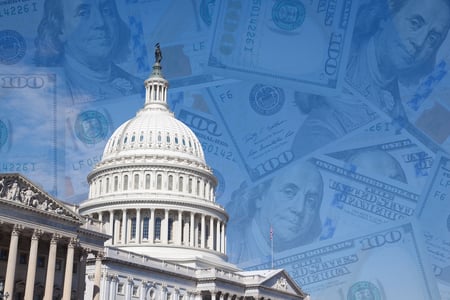
The Trump administration's FY 2027 request proposes $8.5 billion in funding cuts across select K-12 programs. While Title 1 and IDEA funding are largely spared, cuts across a variety of K-12 programs could force districts to make difficult decisions in the coming months.
Read more in K-12 Dive
2. Cell Phone Policy Is Moving Beyond Bans

Researchers argue that while cell phone bans can reduce distractions, they do not solve deeper issues around student behavior and well-being. New research notes that 39 states have regulated student devices in school since 2023 and emphasizes that policies work best when paired with digital literacy instruction and strong parent communication.
A group of education advocacy groups has worked together to create the Report Card project, a database which grades state legislation aiming for phone-free schools. School leaders can view their state's grade on the project website, phonefreeschoolsreport.org.
Read more in District Administration
3. Building An AI Governance Team: District Leaders Share Experiences

K-12 Dive recapped an industry webinar where education leaders shared their experiences adopting AI.
Charlotte-Mecklenburg Schools Superintendent Crystal Hill shared that the district worked with its legal team and school board to develop an AI policy, then formed an AI governance team including staff from key departments. The district is taking a phased approach to AI in the classroom; its first pilot program introduced AI to 30 of its 185 schools.
Indianapolis Public Schools Superintendent Aleesia Johnson said that breaking down silos and bringing her district's technology leader to the decision-making table was critical to helping her team make informed decisions about AI.
Delaware Secretary of Education Cynthia Marten spoke about the support that a state can offer to schools, particularly to smaller districts with fewer employees and resources to test AI. Delaware has created an AI assurance lab, which Marten says tests AI tools and develops procurement guidance for Delaware schools. Offering advice to districts and state agencies, Marten said, “Have clarity, have consistency [and] a relentless focus on outcomes for students. Stay off the hype.”
Read more in K-12 Dive
4. New Report Unpacks Student Perceptions of School Safety
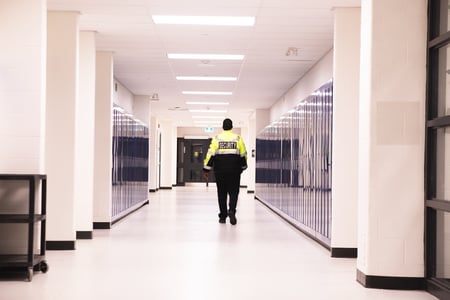
YouthTruth, part of the nonprofit Center for Effective Philanthropy, released a report drawing on over 198,000 student survey responses nationwide during the 2024-25 school year.
The report has several key findings. Students' sense of safety varies across school spaces, with only half of secondary students feeling safe in school bathrooms and just 25 percent feeling safe on school buses. School safety fears were highest among middle schoolers, with gaps in safety anxieties across race, language background, and gender identity. Critically, school staff reported high levels of emergency preparedness while students reported feeling unprepared for emergencies at school, a clear disconnect.
Read more at YouthTruth.org
Our Take: Educators Are Assessing New Trends And Planning For The Future
From cell phone bans to AI regulation, the education sector is balancing innovation with responsibility. The most effective leaders aren’t just reacting to change, they’re adopting holistic systems that anticipate it.
Staying current on emerging K–12 education trends helps schools and partners alike make informed, future-ready decisions.
Kokomo24/7® offers the most holistic health and safety software platform for K-12 schools, empowering organizations to increase operational efficiency and reduce costs.

 CASES™
 ESCALATE™
 TRIAGE™
 NOTIFY™
 FORMS™
 ANALYTICS™
 HOST™
HOST™ OWLPASS®
 ACCESS™
 WELLNESS™
 CREDENTIALS™